Common Issues with Used Kimball Pianos (And How to Fix Them)
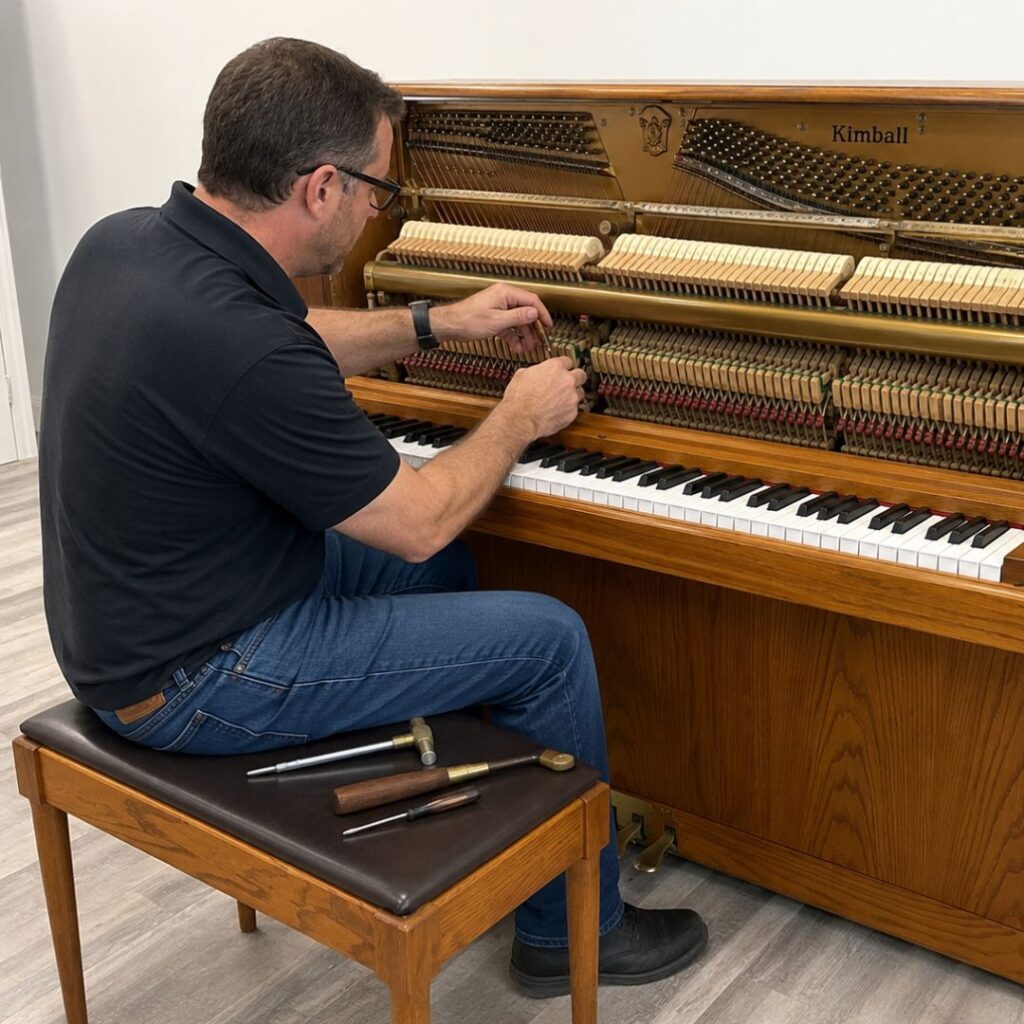
For decades, the W.W. Kimball Piano Company was an absolute giant in the American music industry. If you grew up taking piano lessons in the 1970s, 80s, or 90s, there is a very good chance you played on a Kimball console or upright. Because they were mass-produced to be an affordable “family piano,” there are thousands of used Kimballs on the market today.
While pre-Depression era Kimballs were known for massive soundboards and premium builds, the mid-to-late 20th-century models were built for budget-friendly household use. If you’ve inherited or bought a used Kimball, here are the most common issues you might run into:
1. Sticking Keys & Sluggish Action This is the number one complaint with older Kimball uprights. Over time, the wood inside the piano swells with humidity changes, causing the felt bushings to tighten around the metal pins. This causes a slow, sluggish touch or keys that simply won’t return after being pressed. A technician can fix this by properly cleaning the action, “repinning” tight joints, and applying dry lubricants.
2. Tuning Instability (Loose Tuning Pins) Because many Kimballs were built with mid-tier wood grades during peak mass-production years, the pinblocks can lose their grip as the piano ages. If a piano hasn’t been tuned in a decade, trying to raise the pitch might result in strings slipping out of tune immediately. We always recommend a “pluck test” and a pinblock evaluation before investing heavily in a used Kimball.
3. Buzzing & Rib Separation If you hear a strange rattle or buzz when playing certain notes, it could be rib separation. The wooden ribs glued to the back of the soundboard can pull away over the decades as the glue dries out.
Are they worth fixing? Absolutely—if the fix is routine maintenance! A pitch raise, regulation, and fixing a few sticky keys can turn an inherited Kimball into a wonderful, warm-sounding practice piano for your family. If you’re local, give us a call to schedule an evaluation of your Kimball.
If you have a used Kimball (or any cherished instrument) that needs some care, we would love to help. At Clare’s Player Pianos, we bring deep knowledge, a passion for preservation, and the personal touch your family’s piano deserves.
A Used Kimball Needs More Than a Quick Test
A used Kimball might sound fine for a few minutes and still have worn parts. Checking every key, the pedals, and the tuning gives you a better picture.
The same questions come up with other used instruments, so we’ve included helpful guidance on used piano repairs and ongoing care in one place.
Ready to let your piano sing again?
Contact us today to schedule your tuning or restoration consultation.