Bringing Your Wurlitzer Spinet Back to Life: Tuning & Maintenance
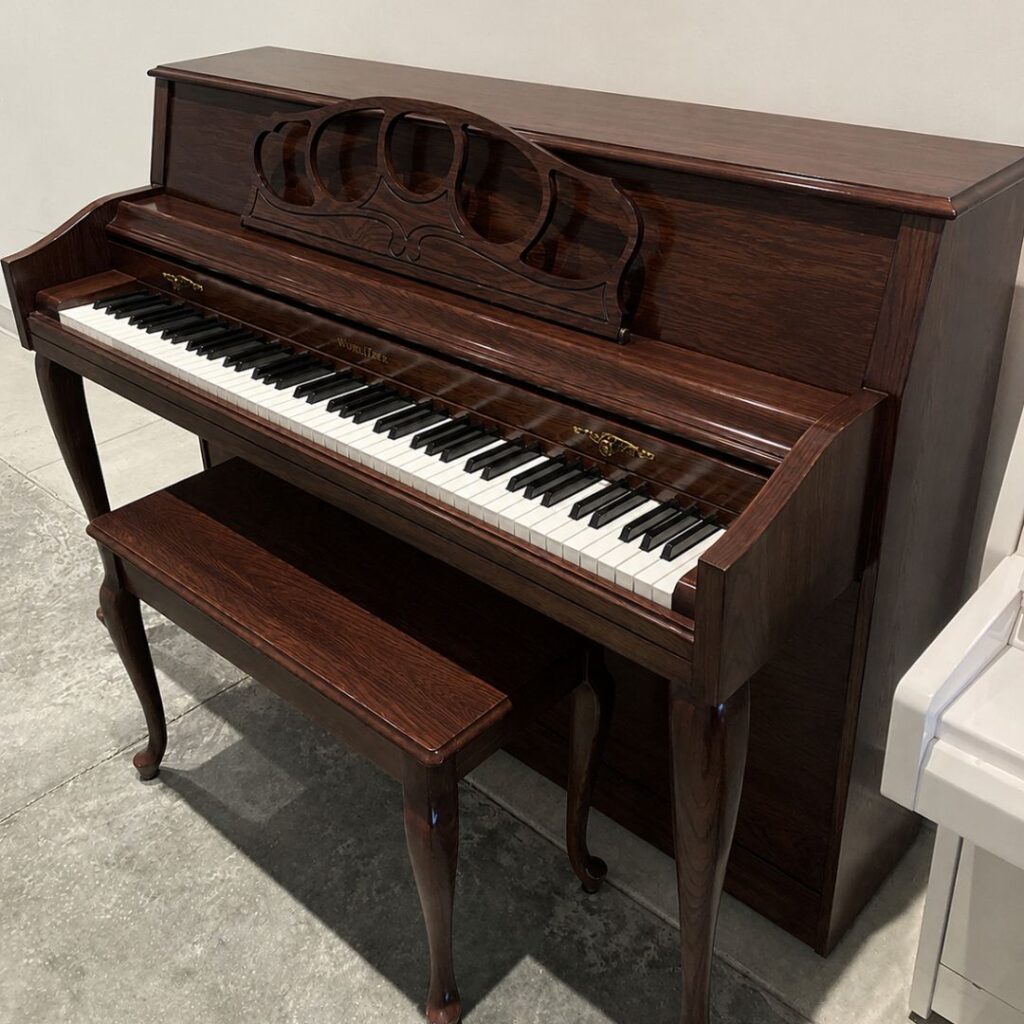
If you have a small, mid-century piano tucked against a wall in your home, there is a very good chance it’s a Wurlitzer spinet. Wurlitzer practically invented the spinet piano in the 1930s to offer families a compact, affordable instrument that could fit into smaller modern homes. Millions were sold, and today, they are one of the most common pianos passed down through families or picked up second-hand.
But if your Wurlitzer spinet hasn’t been played in years, you might be wondering: Can a piano this small still be tuned? The answer is yes, but tuning and servicing a spinet does come with a few unique quirks that require a knowledgeable technician.
The “Spinet Challenge”: Drop Action Because spinet pianos are so short (usually around 36 inches tall), there isn’t enough room inside the cabinet for a traditional piano action. To solve this, Wurlitzer used what is called a “drop action” (or indirect blow action). The mechanism actually sits below the keyboard.
For a piano technician, this means that even basic repairs or adjustments can be much more time-consuming. Reaching the parts requires removing more of the piano’s cabinet and working in a very tight space.
What to Expect When Tuning an Old Wurlitzer Spinet:
- The Need for a Pitch Raise: Because spinets are often viewed as “starter” pianos, they tend to go decades without being tuned. If your Wurlitzer is significantly flat, it will require a “pitch raise” (a rough, rapid tuning to add tension back to the strings) before a fine tuning can be done.
- Inharmonicity (The Spinet Sound): Because spinets have very short strings, the bass notes will never have the deep, booming resonance of a larger upright or grand piano. A good tuner knows how to creatively “stretch” the tuning to make a spinet sound as warm and harmonious as possible despite its physical limitations.
- Watch Out for Plastic Parts: If your Wurlitzer was built in the 1950s or 60s, it may have been built with plastic elbows in the drop action. These original plastic parts become incredibly brittle over time and snap, resulting in dead keys. Fortunately, we can replace these with durable, modern parts!
The Verdict: While Wurlitzer spinets aren’t concert instruments, they are fantastic, space-saving practice pianos with a lot of mid-century charm. If you have a Wurlitzer spinet that needs tuning, regulation, or a few dead keys fixed, the team at Clare’s Player Pianos has the patience and expertise to get it sounding sweet again.
At Clare’s Player Pianos, we bring deep knowledge, a passion for preservation, and the personal touch your family’s piano deserves.
When Your Wurlitzer Spinet Doesn’t Play Right
A Wurlitzer spinet should feel consistent from one key to the next. Sticking notes or a pedal that doesn’t respond tell you something needs attention.
You’ll see those issues discussed alongside other useful information about piano maintenance and mechanical repairs in our piano questions and answers.
Ready to let your piano sing again?
Contact us today to schedule your tuning or restoration consultation.